

What Classes Do Music Majors Take? A Guide to Music Degree Requirements
GET STARTED
If your child has been playing music for a long time, they might be interested in majoring in it in college, and you’re probably curious on what exactly that entails. Many parents hear “music major” and assume college students spend most of their time practicing their instrument, but there’s a lot more to it than that!
While the specific requirements of a music degree might vary, most music programs combine hands-on performance with academic study. Students typically take a combination of music theory, music history, private lessons, ensembles, and general education courses. Depending on the degree and specialization, students may also study composition, conducting, technology, performance, music education, or music business, which are all great preparation for using their degree in the real world!
- What Are The Main Classes Music Majors Take?
- What About Private Lessons?
- Music Major General Education Classes
- Different Focuses: What Kind of “Music Majors” Are There?
- Music Education Classes
- Music Production and Music Technology Classes
- How Can Music Lessons Prepare Students for College Music Programs?
- The Benefits of a Music Degree
- Ready to Get A Head Start on Your Future Music Degree?
- What Students Are Asking About Music Degrees

What Are The Main Classes Music Majors Take?
The main classes that music majors take regardless of their focus include music theory, ear training, and music history. While music majors will definitely spend many hours of their college years playing music, they’ll also be focusing on practicing independently, studying and analyzing music scores, writing papers, and completing theory assignments.
Music Theory
Music theory teaches students how music works, and is an essential part for further understanding their instruments past the beginner years!
Music theory topics that students may study:
- Scales and keys
- Chords and harmony
- Chord progressions
- Melody and counterpoint
- Musical form
- Analysis
- Composition fundamentals
Aural Skills / Ear Training
Students will learn to recognize musical concepts by hearing them. They might practice:
- Identifying intervals
- Recognizing chords
- Singing melodies
- Reading music aloud
- Transcribing melodies and rhythms
- Developing pitch recognition
Music History
Music has a deep and long standing history, and music majors study music across different historical periods and cultures.
Possible classes might include:
- Medieval music
- Renaissance music
- Baroque music
- Classical music
- Romantic music
- 20th- and 21st-century music
- American music
- World music
When studying world music, students aren’t just memorizing composers and dates, they’re learning about how music reflects culture, technology, politics, and society.

What About Private Lessons?
Private music lessons are often an important part of a music degree. Performance majors must prioritize individual instruction, and will work privately with a faculty member on their main instrument. Private lessons might focus on:
- Technique
- Repertoire
- Performance preparation
- Musical interpretation
- Audition preparation
Private lessons, especially when started at a young age, also help promote the development of empathy and social skills!
Ensemble Performances as a Music Major
Many music programs require students to participate in ensembles. This might include:
- Concert band
- Orchestra
- Choir
- Jazz ensemble
- Chamber groups
- Musical theater ensembles
- Contemporary/pop ensembles
Participating in an ensemble encourages students to collaborate with each other and learn more advanced rehearsal techniques and skills. They’ll master how to perform as part of a group, how to follow a conductor, and better music communication. When music majors participate in ensemble performances, they’re learning how to perform individually as well as how to work with other musicians.
Music Major General Education Classes
Regardless of the major, college students still need to take general education classes to complete their degree requirements. Depending on the college, students may take:
- English composition
- Mathematics
- Science
- History
- Social sciences
- Foreign language
- Humanities
- Public speaking
Some schools require students to complete their general education classes in the first year, and others allow them to take a few each semester until graduation.

Different Focuses: What Kind of “Music Majors” Are There?
While “music major” is a fairly broad term, there are a lot of different specializations available, like music education or music production/technology.
Music Education Classes
Music education combines music study with education coursework. It’s a great major choice for those who want to someday teach music themselves!
Possible classes might include:
- Music theory
- Aural skills
- Music history
- Private lessons
- Ensembles
- Conducting
- Education psychology
- Classroom management
- Teaching methods
- Student teaching
Essentially, students preparing to become music teachers need to learn both how to make music and how to teach it.
Music Production and Music Technology Classes
Modern music degrees can extend beyond traditional performance career paths. After all, someone has to record, engineer, and master those albums being released!
Potential music production courses include:
- Music production
- Recording
- Audio engineering
- Digital audio
- Music technology
- Songwriting
- Mixing and mastering
- Electronic music
- Music business
Music programs can be demanding, because students are balancing academic coursework with regular instrument practice, performances, and rehearsals. You don’t need to be an expert musician before becoming a music major, but preparation does matter. Students should plan to enter college with an appropriate foundation for their chosen program. This might look like knowing how to read music, performance experience, or consistent practice habits.
How Can Music Lessons Prepare Students for College Music Programs?
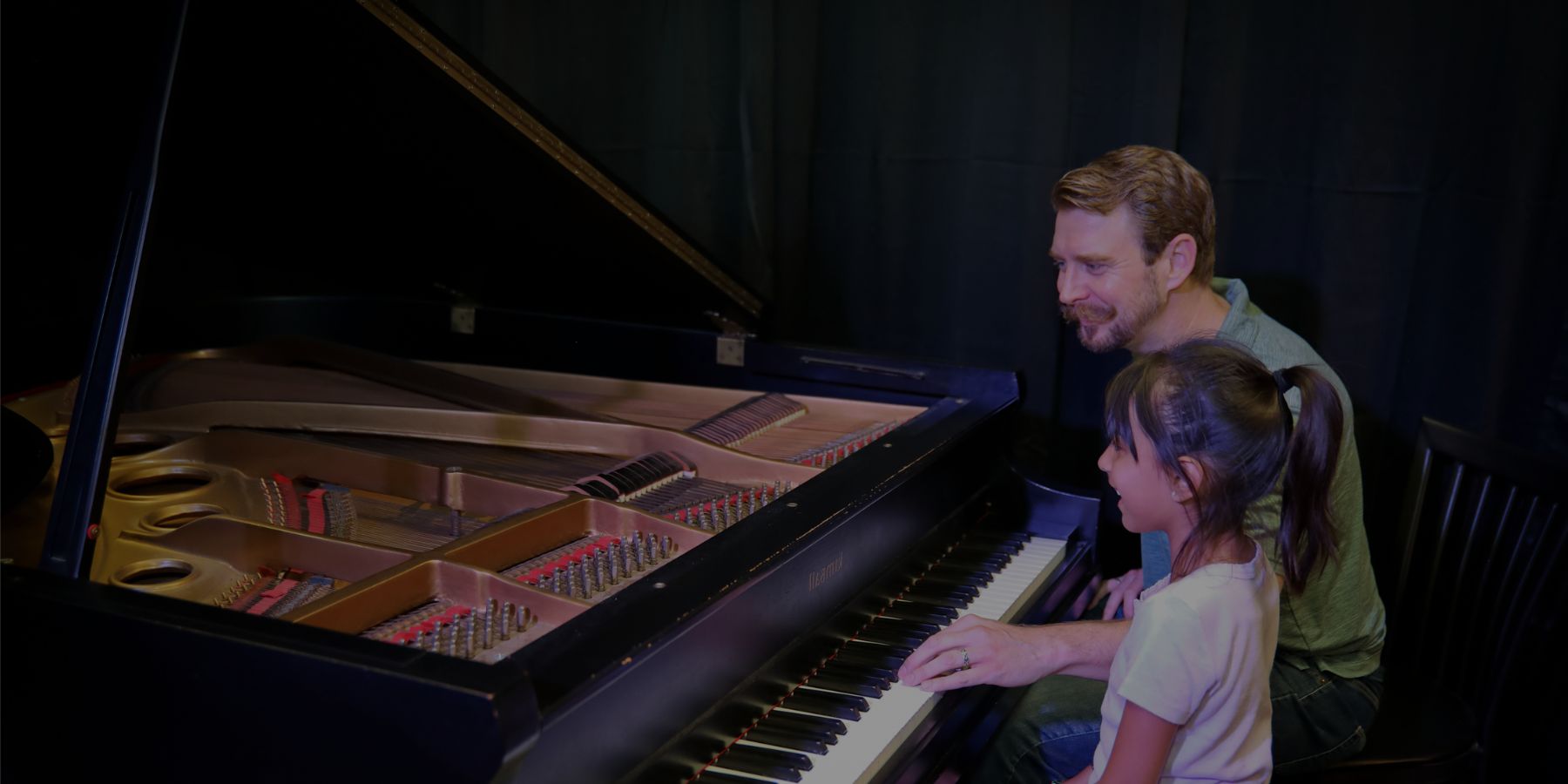
Private music lessons, especially when starting at a younger age, can help students build foundational skills long before they reach college. They can also help students develop consistent practice habits, strengthen their music-reading skills, and learn how to receive and apply feedback during their lessons and performances.

The Benefits of a Music Degree
Whether you’re majoring in music to eventually teach, or to perform, this degree offers a variety of real world benefits. Karli Thompson, who teaches guitar, said that her music degree helped her “gain the knowledge I needed to be able to put my dreams into motion. It has also given me the opportunity to be able to share what I’ve learned and love with others in hopes they might find the same joy I do!”
Austin, who teaches trumpet and piano, says that: “I’d say that the biggest benefits of a music degree are the social and musical experiences! I haven’t performed as often and consistently as a music grad than I did while I was in school. 4+ years of weekly lessons and numerous rehearsals every week too add so much to your performance experience in such a short amount of time.”
Ready to Get A Head Start on Your Future Music Degree?
Students don’t need to have their entire career figured out before beginning music lessons, but early musical experiences, like weekly private lessons, can help students discover what areas of music they enjoy most. Whether they eventually pursue performance, education, production, or simply keep music as a lifelong passion, quality instruction gives them a strong foundation. Explore music lessons at Ensemble Performing Arts and give your child the opportunity to build the skills, confidence, and musical foundation that can grow with them.

What Students Are Asking About Music Degrees
What classes are required for a music major?
The most common class requirements for music majors include music theory, ear training, and music history. Students will also take private lessons and perform in group ensembles.
Do music majors have to take music theory?
Music theory is a common core requirement in many music programs, because it provides the framework needed to understand, communicate, and create music professionally.
How many years does it take to get a music degree?
A traditional Bachelor’s Degree in Music takes about four years of full time study. You can also work towards:
- Associate’s Degree (AA): 2 years
- Master’s Degree (MA): adds 2 years of study past the Bachelor’s Degree
- Doctorate / Artist Diploma: takes 3 to 5 additional years
- Accelerated Online Programs: can be finished in 18 to 24 months with a heavy course load
Is a music degree only for students who want to become professional musicians?
Music majors often go on to become professional musicians, but they can also be music teachers, composers/songwriters, producers, or entertainment professionals.
Author: Marisa E. Cardin
Marisa E. Cardin is the Assistant Manager of Neighborhood Music in Aurora, Colorado. She graduated with a Bachelor of Arts in Creative Writing from Metropolitan State University of Denver, Colorado in 2019. She is published in various magazines and chapbooks, including The Flagler Review and Perfume River Poetry. Most recently, she completed and published her sci-fi trilogy, Jax Cassaway and The Shadow Runners, in 2025. When she isn’t writing, she can be found jamming on her alto saxophone or cuddling her four cats. She currently lives in Aurora, Colorado.